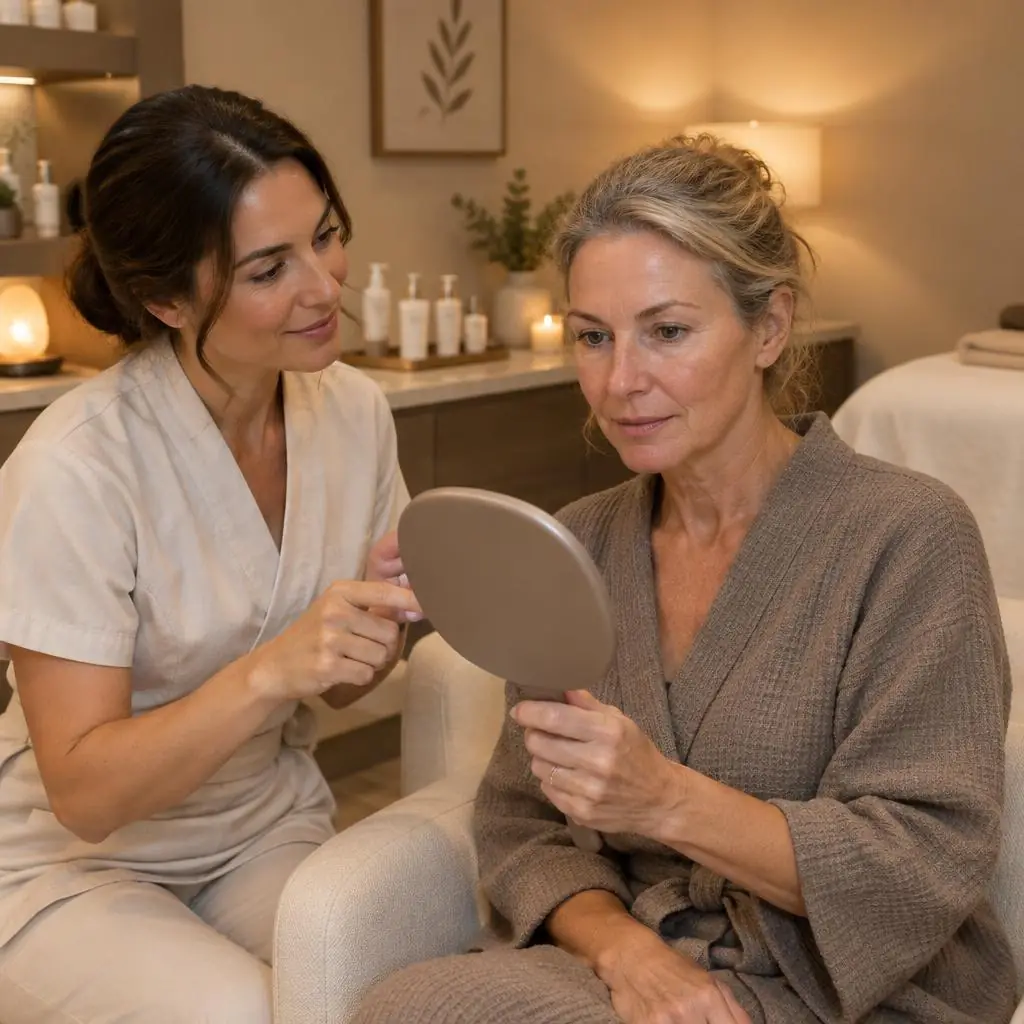
Factoring Local Sunshine and Outdoor Routines into Tone Care
Living in Lee’s Summit often means spending sunny afternoons out by Longview Lake or walking through Downtown Lee’s Summit on warm weekends. Because ultraviolet rays trigger pigment-producing cells, even brief, unshielded sun exposure can darken post-breakout marks or cause patchy discoloration to reappear. When we plan a hyperpigmentation facial, we take your outdoor habits into account so your care aligns with your actual routine.
Skin that has recently been treated needs thoughtful shielding, especially during hot Missouri summers when UV levels climb. We emphasize diligent daily sun protection and gentle handling rather than aggressive resurfacing that could leave your complexion vulnerable. Whether you are running errands around Summit Fair or enjoying local parks, planning appointments around periods of limited sun exposure may help protect your progress.
Adapting Hyperpigmentation Care to Missouri Weather Shifts
The Kansas City climate brings sharp swings between humid summer heat and dry winter air, both of which affect how skin manages discoloration. Frigid winter winds can compromise your moisture barrier, making marks from healed blemishes appear more noticeable and leaving your face prone to irritation. In contrast, summer humidity increases sweat and oil production, which might tempt people to scrub their skin too aggressively.
A hyperpigmentation facial works to provide steady support through these regional seasonal shifts. During drier months, the focus leans toward calming hydration and barrier maintenance that may help soften the look of uneven tone without triggering flaking. When spring and summer arrive, the strategy shifts toward defensive care, helping your skin stay resilient even when regional temperatures and sunlight peak.
Planning Your Visit Along US-50, I-470, and Route 291
Our spa is located directly in Lee’s Summit at 286 SW Blue Parkway, Suite 2, inside KC Injectables Med Spa. Because we sit near the intersection of US-50 and Missouri Route 291, reaching us from anywhere in eastern Jackson County or northern Cass County is simple. Clients traveling from north of town can easily take I-470 to Blue Parkway without dealing with complicated detours.
Having professional skincare close to home simplifies maintaining a regular skincare cadence. When addressing stubborn dark marks or lingering spots, steady appointments and consistent aftercare matter far more than infrequent, overly aggressive visits. Our central location makes it easy to stop by between shopping at Summit Fair, dining in Downtown Lee’s Summit, or heading home after work.
Choosing Between a Hyperpigmentation Facial and Chemical Peels
Clients visiting our Lee’s Summit spa often wonder whether they should choose a hyperpigmentation facial or schedule a chemical peel. A tone-focused facial prioritizes calming nourishment and gentle exfoliation, making it well-suited for skin prone to post-inflammatory hyperpigmentation or irritation. It allows us to review your pigment history carefully before any active ingredients are applied to your face.
In contrast, chemical peels provide deeper surface renewal, which may help certain forms of stubborn, long-standing pigment but carries stricter demands for downtime and sun avoidance. If you are unsure whether your marks represent lingering vascular redness, true melanin pigment, or textural changes, starting with a facial provides a measured opportunity to assess your skin before considering more intensive chemical exfoliation.
Supporting Your Skin Between Appointments in Lee’s Summit
Sustained improvement in uneven skin tone depends largely on the habits you maintain between spa visits. Resisting the urge to pick or squeeze new blemishes is critical, as physical trauma frequently triggers fresh post-inflammatory marks that linger for months. Pairing this mindful habit with consistent broad-spectrum sunscreen helps keep ambient UV exposure from darkening existing spots while you go about your week.
It is equally beneficial to set aside abrasive physical scrubs or unverified lightening products that can compromise your moisture barrier and provoke rebound discoloration. Keeping your home regimen calm, hydrated, and protected from the elements gives professional facials the best opportunity to succeed. Patient, consistent care remains the most dependable route toward a clearer-looking, more uniform complexion.
Who it may suit
- People seeking guidance on lingering discoloration after settled blemishes.
- Clients with uneven-looking tone who understand that improvement may be gradual.
- Those willing to maintain sun protection and avoid picking or unnecessary irritation.
- People comparing a tone-focused facial with peel options before deciding.
- Clients who want their pigment history considered before exfoliation is proposed.
Concerns it may help address
- Brown or darker-looking marks remaining after breakouts.
- Patchy-looking tone that has already been appropriately assessed.
- Discoloration made more noticeable by ongoing sun exposure.
- A history of marks after irritation, picking, or unsuitable products.
- Uncertainty about the differences between pigment, redness, and textural scars.
Start by understanding what the mark represents
Not every mark after a blemish is excess pigment. Some are persistent redness, while others involve a change in texture or a true scar. These differences influence what a facial can reasonably address. Your esthetician can discuss cosmetic appearance, but a diagnosis of melasma or another pigment disorder belongs with an appropriately qualified clinician.
New, changing, irregular, bleeding, or otherwise concerning spots should be medically evaluated before cosmetic treatment. Do not assume a dark area is harmless simply because it resembles a sunspot or appeared near an old blemish. A safe consultation should recognize uncertainty and support referral rather than promise to remove every visible patch.
Avoid turning treatment into another source of inflammation
Post-inflammatory hyperpigmentation can follow acne, irritation, injury, or overly aggressive treatment. This makes your previous reactions particularly relevant. Tell your esthetician whether you develop long-lasting marks after waxing, picking, peels, or product reactions. That history may justify a more conservative approach even when your skin feels comfortable on the appointment day.
Your esthetician will confirm whether exfoliation is proposed and which products are suitable. A tingling or peeling sensation is not proof that pigment is being treated effectively. Combining several brightening products or procedures can increase irritation and make progress harder to assess, so a simpler, well-tolerated plan may be preferable.
Build a plan that accounts for recurrence
Uneven tone often changes gradually and may return when the triggers continue. Sun protection is central to a realistic plan, alongside avoiding picking and managing active inflammation appropriately. Broad-spectrum sunscreen, shade, and protective clothing matter even when the facial produces a brighter-looking surface. Certain pigment conditions may require additional clinician-directed protection strategies.
Review improvement using photographs taken under similar lighting rather than relying on daily mirror changes. A facial may support the appearance of more even tone, but it cannot guarantee removal or prevent recurrence. If progress stalls or the pattern changes, reassessment and medical guidance are more useful than repeatedly escalating exfoliation.
Before, during and after
before
Describe when discoloration started, whether it changes, previous diagnoses, sun exposure, and any history of pigment after irritation.
during
Your esthetician will confirm a suitable approach and explain why some exfoliating steps may be limited or avoided.
after
Follow a gentle routine, maintain sun protection, and monitor for irritation or darkening rather than assuming every change is expected.
Is it right for you?
A consultation or referral may be appropriate when:
- Suspicious, new, or changing pigmented lesions require medical assessment before cosmetic treatment.
- Active inflammation or infection may need to be addressed before tone-focused care.
- A history of post-inflammatory pigmentation should influence treatment intensity and product choices.
- Pregnancy, nursing, and prescription pigment treatments must be disclosed for appropriate screening.
- Recent tanning, sunburn, peels, or laser procedures may affect treatment timing.
Preparation
- Bring details of any diagnosis or treatment previously given for the discoloration.
- List brightening products, acids, retinoids, and prescribed topical medications.
- Avoid picking blemishes or deliberately intensifying exfoliation before the appointment.
- Explain recent sun exposure and any upcoming outdoor plans that affect aftercare.
- Consult your treating clinician before altering prescription pigment treatment or other medication.
Aftercare
- Use broad-spectrum sunscreen consistently and combine it with shade and protective clothing.
- Avoid picking, rubbing, or scrubbing areas that feel irritated.
- Follow the recommended timing for restarting exfoliants and brightening products.
- Introduce new products cautiously rather than layering several unfamiliar actives.
- Report persistent irritation, unexpected darkening, or changing lesions and seek medical advice when appropriate.
Preparation and aftercare above are general guidance; your provider gives final instructions for your appointment.
Realistic expectations
- Improvement may be gradual, partial, or limited depending on the cause and depth of discoloration.
- A facial does not guarantee removal of melasma, sunspots, or post-inflammatory marks.
- Pigmentation can recur when contributing factors continue.
- Irritation can worsen uneven tone, making treatment tolerance an important outcome.
How it compares
Compare the likely cause of the appearance change before choosing a treatment category.
| Option | Best for | Experience | Downtime |
|---|---|---|---|
| Acne-fighting facial | Current congestion and breakout-prone skin rather than settled pigment marks. | Attention to suitable congestion care and inflammation limits. | Selected steps may cause temporary redness or localized tenderness. |
| Chemical peels | Selected tone concerns after formulation-specific assessment. | A distinct chemical exfoliation treatment with its own precautions. | Varies by peel, skin response, and the treatment plan. |
| Microneedling | Selected textural concerns rather than assuming all dark marks are scars. | Controlled needle punctures requiring separate risk assessment. | A healing period and pigment-aware aftercare are necessary. |
Planning your visit from Lee’s Summit, MO
Lee’s Summit is home to our spa. The city has a walkable downtown, retail at Summit Fair, and recreation at Longview Lake.
Our spa is here in Lee’s Summit at 286 SW Blue Parkway, Suite 2, Lee’s Summit, MO 64063, inside KC Injectables Med Spa. Use the directions link below for current routing.
Account for local sun exposure and outdoor routines when planning tone-focused care and ongoing protection.