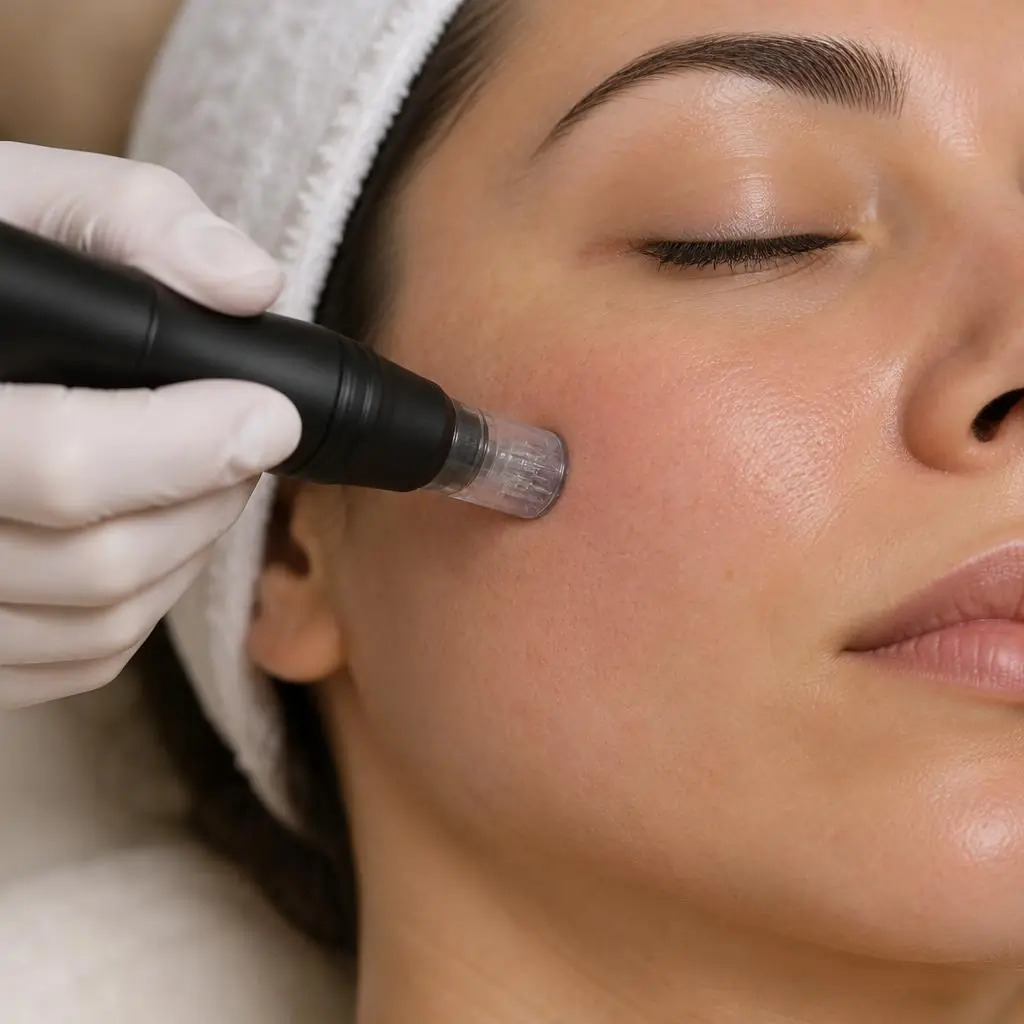
Who it may suit
- Adults seeking assessment of uneven texture or selected established acne scars.
- People interested in gradual improvement rather than an immediate event-day refresh.
- Clients able to follow recovery instructions and protect healing skin from sun exposure.
- Those willing to discuss health history, medications, and previous healing problems before booking.
Concerns it may help address
- Selected depressed acne scars after active breakouts have been appropriately controlled.
- Uneven-looking texture that may respond to a remodeling-focused treatment.
- Fine lines whose appearance may improve gradually with suitable treatment.
- Skin quality concerns that require more than temporary surface hydration.
- Uncertainty about whether a facial or a more involved procedure is appropriate.
Match the procedure to the type of texture
Not every uneven area is the same. Depressed acne scars, raised scars, enlarged-looking pores, and pigment marks need different assessments. Microneedling may be considered for selected depressed scars, but it does not erase all scar types or reliably remove discoloration. Raised or keloid scars require particular caution and appropriate clinical input.
A consultation should identify your main concern and explain the limits of the proposed approach. If active inflammatory acne, infection, or an undiagnosed skin condition is present, treating that issue first may be more important. Ask whether your concern falls within the provider’s scope and whether a medical referral would be more suitable.
Understand healing rather than chasing intensity
The intended benefit comes from a controlled response and subsequent remodeling, not from making the skin bleed as much as possible. Depth and technique should reflect the treatment area, skin condition, and professional assessment. More aggressive treatment is not automatically better and can increase the likelihood of irritation, pigmentation changes, or scarring.
Temporary redness, warmth, tightness, and sensitivity can occur afterward. The degree and duration vary, so do not assume that another person’s recovery predicts yours. Your esthetician will confirm expected changes and explain which symptoms require prompt contact or medical attention. Increasing pain, spreading redness, or discharge should not be dismissed as normal progress.
Plan a gradual, reviewable course
Collagen remodeling is gradual, so the first mirror check is not a reliable verdict on the final outcome. Early swelling can temporarily change the appearance of lines or scars without representing lasting improvement. Progress should be reviewed after appropriate healing, ideally with comparable photographs and a discussion of comfort, pigment changes, and your own priorities.
A series may be discussed, but neither a fixed number of sessions nor a particular level of improvement can be guaranteed. Your esthetician will confirm suitable spacing and whether continued treatment makes sense. If progress is limited or adverse effects occur, reassessment is more useful than automatically repeating the same procedure.
Before, during and after
before
Complete screening for medications, infections, scar history, pigment changes, recent procedures, and any condition affecting healing.
during
The provider will confirm the planned approach, explain comfort measures if offered, and monitor your response throughout treatment.
after
Follow the specific cleansing, product, sun-protection, and activity instructions provided rather than treating recovery like an ordinary facial.
Is it right for you?
A consultation or referral may be appropriate when:
- Active skin infection, cold sores, or inflammatory lesions in the treatment area may require postponement.
- A history of keloids, poor wound healing, or significant post-inflammatory pigmentation requires careful assessment.
- Conditions or medications affecting immunity, bleeding, or healing may require treating-clinician clearance.
- Pregnancy, nursing, and recent isotretinoin use must be disclosed so suitability can be individually assessed.
- Suspicious lesions or unexplained skin changes require medical evaluation before cosmetic treatment.
Preparation
- Provide a complete medication and supplement list, including prescribed and nonprescribed products.
- Ask your treating clinician before making any change to prescription medication.
- Report a history of cold sores so any necessary clinical planning can happen beforehand.
- Avoid sunburn and disclose recent tanning or significant sun exposure.
- Discuss recent waxing, peels, laser treatments, and other procedures before scheduling.
- Arrange treatment when you can follow aftercare and accommodate visible recovery.
Aftercare
- Use only the products and cleansing approach specifically approved for the early healing period.
- Avoid touching, picking, or applying unapproved active products to freshly treated skin.
- Follow the provider’s instructions on when to resume makeup, exercise, swimming, and heat exposure.
- Follow guidance on sunscreen timing and minimize sun exposure with shade and protective clothing.
- Seek prompt medical advice for signs of infection, severe swelling, or worsening pain.
Preparation and aftercare above are general guidance; your provider gives final instructions for your appointment.
Realistic expectations
- Improvement, when it occurs, develops gradually and may be incomplete.
- Temporary redness and sensitivity are expected possibilities, while complications remain possible.
- Microneedling does not replace surgery, remove every scar, or prevent future aging.
- Recovery and treatment intervals depend on the actual procedure and your healing response.
How it compares
Compare the mechanism and recovery commitment, not just the concern named on a menu.
| Option | Best for | Experience | Downtime |
|---|---|---|---|
| Anti-aging facial | A gentler focus on hydration and the appearance of surface texture. | Product-based care without intentional needle punctures. | Generally less involved, depending on the selected steps. |
| Chemical peels | Selected surface texture or tone concerns after formulation-specific screening. | Chemical exfoliation rather than a needle-based procedure. | Varies substantially with the peel and skin response. |
| Acne-fighting facial | Appropriate care for congestion and breakout-prone skin rather than scar remodeling. | A targeted facial with steps chosen around current inflammation. | May involve temporary redness without microneedling-style healing. |