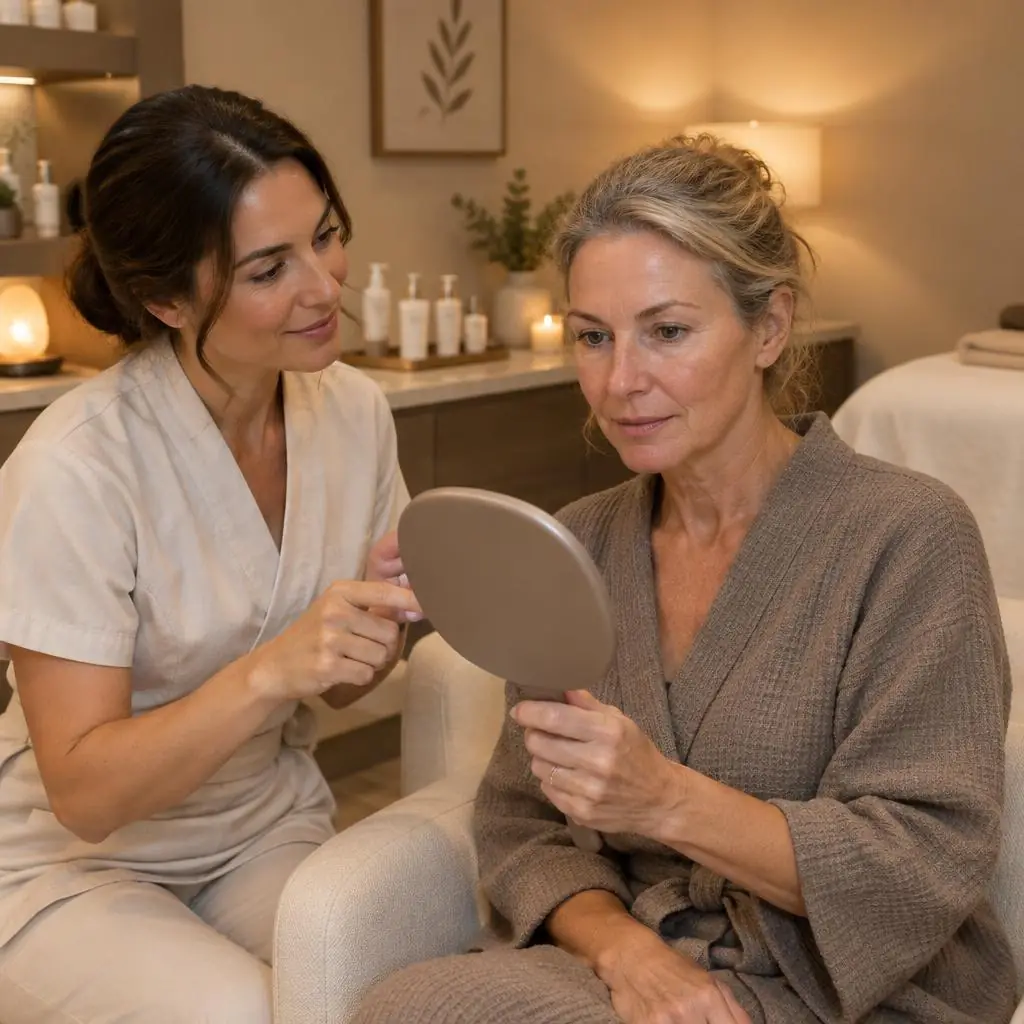
Balancing Lake Living with Tone-Focused Skin Care
Life in Weatherby Lake often revolves around spending time outdoors near the water, whether you are walking along the shoreline or enjoying peaceful mornings on the deck. However, water reflection amplifies ultraviolet radiation, which can make brown marks from settled blemishes or patchy pigment significantly darker. When planning skin care aimed at evening tone, our team takes your everyday sun exposure into account before deciding how deeply to work with exfoliation.
Pigment cells are protective by nature, reacting quickly to UV rays and heat. If you jump into an aggressive brightening routine while spending consistent hours outside around Weatherby Lake, the skin can respond with additional discoloration instead of clarifying. Our hyperpigmentation facial focuses on calming the surface and supporting the moisture barrier first, ensuring your skin remains resilient against the bright Midwest elements without triggering renewed post-inflammatory marks.
Distinguishing Surface Marks from Ongoing Irritation
Many clients visiting us from Platte County struggle with darker spots left behind after blemishes have resolved. It is common to feel unsure whether a mark is lingering pigment, vascular redness, or a textural change. A focused consultation helps clarify what is happening across your skin. When brown coloration lingers, it often stems from previous picking, irritation, or harsh home products that caused the skin to overproduce melanin during healing.
Approaching these marks requires patience rather than force. Scrubbing away at spots or layering multiple acidic serums can compromise the skin barrier and slow down your progress. During your visit, we review your pigment history and evaluate your skin's current sensitivity level. This cautious baseline ensures that any facial treatment applied works in harmony with your natural renewal cycle, gently encouraging clarity without provoking fresh inflammation.
Adapting Care Through Platte County's Changing Climate
The dramatic swing in Kansas City weather brings humid, high-UV summers followed by dry, brisk winters that strip away moisture. For Weatherby Lake residents, these seasonal transitions directly impact how hyperpigmentation behaves. Summer heat and sun can provoke latent discoloration, while winter indoor heating often dries the skin, making uneven patches look more pronounced and leaving the outer barrier vulnerable to irritation from active topicals.
Timing your professional facial around seasonal conditions helps protect your results. In sunnier months, our hyperpigmentation facial emphasizes mild resurfacing, deep hydration, and supportive antioxidants that do not leave your skin over-sensitized to sunlight. When cooler weather arrives, we can gradually adjust our approach, helping you navigate the dry months without risking the peeling and flaking that often precedes post-inflammatory pigment.
Choosing Between a Targeted Facial and Exfoliating Peels
Clients comparing their options often wonder whether a hyperpigmentation facial or a dedicated chemical peel is the right path forward. Chemical peels deliver intensive exfoliation to target deeper cellular turnover, but they require strict downtime and total sun avoidance afterward. If your lifestyle includes regular outdoor activities near Weatherby Lake or if your skin reacts easily to strong actives, starting with a facial is often the safer, more sustainable choice.
A hyperpigmentation facial provides progressive care without significant shedding or prolonged redness. It focuses on gentle cell renewal, moisture restoration, and skin-soothing botanicals that may help soften the appearance of uneven tone over a series of visits. For clients who understand that gradual improvements offer the best defense against rebound discoloration, this patient, low-irritation method allows you to stay active without worrying about extended recovery periods.
Coordinating Your Appointment and Post-Treatment Routine
Although Weatherby Lake is a quiet residential community near Parkville without our physical office, visiting our Lee’s Summit location is a straightforward trip. Clients typically connect via Missouri Route 45 to I-435 South, traveling across the metro to find us inside KC Injectables Med Spa at 286 SW Blue Parkway, Suite 2. Planning your visit around errands or weekend downtime makes it easy to incorporate dedicated skin care into your regular routine.
After your appointment, protecting your fresh complexion during the drive home and in the days that follow is essential. We recommend bringing a broad-spectrum mineral sunscreen and a wide-brimmed hat for any immediate outdoor errands around Weatherby Lake. By avoiding hot showers, strenuous outdoor workouts, and direct midday sun immediately following your session, you give your skin the calm, protected environment it needs to recover and thrive.
Who it may suit
- People seeking guidance on lingering discoloration after settled blemishes.
- Clients with uneven-looking tone who understand that improvement may be gradual.
- Those willing to maintain sun protection and avoid picking or unnecessary irritation.
- People comparing a tone-focused facial with peel options before deciding.
- Clients who want their pigment history considered before exfoliation is proposed.
Concerns it may help address
- Brown or darker-looking marks remaining after breakouts.
- Patchy-looking tone that has already been appropriately assessed.
- Discoloration made more noticeable by ongoing sun exposure.
- A history of marks after irritation, picking, or unsuitable products.
- Uncertainty about the differences between pigment, redness, and textural scars.
Start by understanding what the mark represents
Not every mark after a blemish is excess pigment. Some are persistent redness, while others involve a change in texture or a true scar. These differences influence what a facial can reasonably address. Your esthetician can discuss cosmetic appearance, but a diagnosis of melasma or another pigment disorder belongs with an appropriately qualified clinician.
New, changing, irregular, bleeding, or otherwise concerning spots should be medically evaluated before cosmetic treatment. Do not assume a dark area is harmless simply because it resembles a sunspot or appeared near an old blemish. A safe consultation should recognize uncertainty and support referral rather than promise to remove every visible patch.
Avoid turning treatment into another source of inflammation
Post-inflammatory hyperpigmentation can follow acne, irritation, injury, or overly aggressive treatment. This makes your previous reactions particularly relevant. Tell your esthetician whether you develop long-lasting marks after waxing, picking, peels, or product reactions. That history may justify a more conservative approach even when your skin feels comfortable on the appointment day.
Your esthetician will confirm whether exfoliation is proposed and which products are suitable. A tingling or peeling sensation is not proof that pigment is being treated effectively. Combining several brightening products or procedures can increase irritation and make progress harder to assess, so a simpler, well-tolerated plan may be preferable.
Build a plan that accounts for recurrence
Uneven tone often changes gradually and may return when the triggers continue. Sun protection is central to a realistic plan, alongside avoiding picking and managing active inflammation appropriately. Broad-spectrum sunscreen, shade, and protective clothing matter even when the facial produces a brighter-looking surface. Certain pigment conditions may require additional clinician-directed protection strategies.
Review improvement using photographs taken under similar lighting rather than relying on daily mirror changes. A facial may support the appearance of more even tone, but it cannot guarantee removal or prevent recurrence. If progress stalls or the pattern changes, reassessment and medical guidance are more useful than repeatedly escalating exfoliation.
Before, during and after
before
Describe when discoloration started, whether it changes, previous diagnoses, sun exposure, and any history of pigment after irritation.
during
Your esthetician will confirm a suitable approach and explain why some exfoliating steps may be limited or avoided.
after
Follow a gentle routine, maintain sun protection, and monitor for irritation or darkening rather than assuming every change is expected.
Is it right for you?
A consultation or referral may be appropriate when:
- Suspicious, new, or changing pigmented lesions require medical assessment before cosmetic treatment.
- Active inflammation or infection may need to be addressed before tone-focused care.
- A history of post-inflammatory pigmentation should influence treatment intensity and product choices.
- Pregnancy, nursing, and prescription pigment treatments must be disclosed for appropriate screening.
- Recent tanning, sunburn, peels, or laser procedures may affect treatment timing.
Preparation
- Bring details of any diagnosis or treatment previously given for the discoloration.
- List brightening products, acids, retinoids, and prescribed topical medications.
- Avoid picking blemishes or deliberately intensifying exfoliation before the appointment.
- Explain recent sun exposure and any upcoming outdoor plans that affect aftercare.
- Consult your treating clinician before altering prescription pigment treatment or other medication.
Aftercare
- Use broad-spectrum sunscreen consistently and combine it with shade and protective clothing.
- Avoid picking, rubbing, or scrubbing areas that feel irritated.
- Follow the recommended timing for restarting exfoliants and brightening products.
- Introduce new products cautiously rather than layering several unfamiliar actives.
- Report persistent irritation, unexpected darkening, or changing lesions and seek medical advice when appropriate.
Preparation and aftercare above are general guidance; your provider gives final instructions for your appointment.
Realistic expectations
- Improvement may be gradual, partial, or limited depending on the cause and depth of discoloration.
- A facial does not guarantee removal of melasma, sunspots, or post-inflammatory marks.
- Pigmentation can recur when contributing factors continue.
- Irritation can worsen uneven tone, making treatment tolerance an important outcome.
How it compares
Compare the likely cause of the appearance change before choosing a treatment category.
| Option | Best for | Experience | Downtime |
|---|---|---|---|
| Acne-fighting facial | Current congestion and breakout-prone skin rather than settled pigment marks. | Attention to suitable congestion care and inflammation limits. | Selected steps may cause temporary redness or localized tenderness. |
| Chemical peels | Selected tone concerns after formulation-specific assessment. | A distinct chemical exfoliation treatment with its own precautions. | Varies by peel, skin response, and the treatment plan. |
| Microneedling | Selected textural concerns rather than assuming all dark marks are scars. | Controlled needle punctures requiring separate risk assessment. | A healing period and pigment-aware aftercare are necessary. |
Planning your visit from Weatherby Lake, MO
Weatherby Lake is a residential lake city in Platte County near Parkville.
We don’t have an office in Weatherby Lake. We welcome clients from Weatherby Lake at our Lee’s Summit spa — 286 SW Blue Parkway, Suite 2, Lee’s Summit, MO 64063, inside KC Injectables Med Spa. Major roads in and around Weatherby Lake include I-435, Missouri Route 45; the Google Maps directions link below gives you live routing and timing.
Account for local sun exposure and outdoor routines when planning tone-focused care and ongoing protection.