How Basehor’s Changing Seasons Influence Sensitive Skin
Living along the open stretches of Leavenworth County means facing sharp seasonal shifts. Dry prairie winds in the winter months can strip moisture from the skin's outer surface, while intense summer heat and humidity often lead to increased sweating, sun exposure, and subsequent irritation. For individuals with sensitive skin, these environmental swings often trigger sudden tightness, surface flaking, or heightened flushing that does not respond well to typical heavy creams.
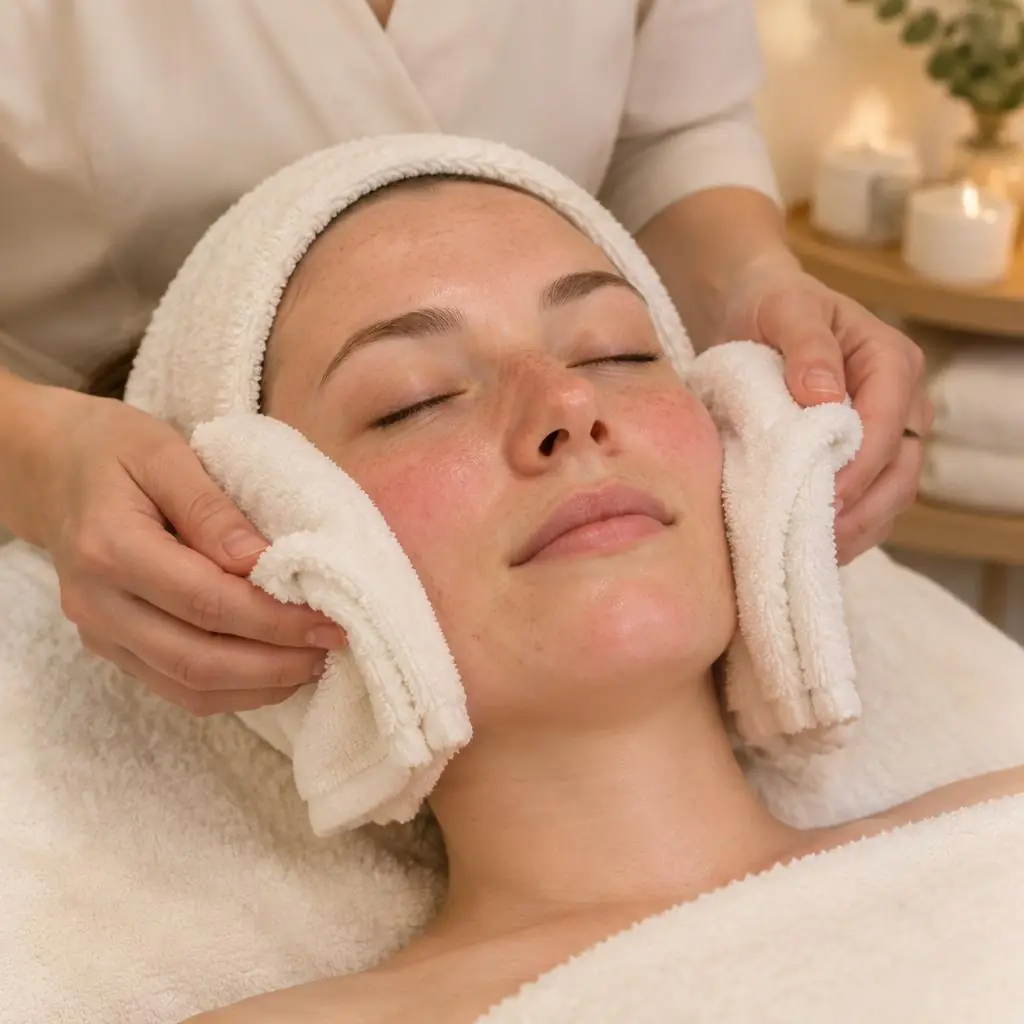
When winter air turns bitter along US-24/40, indoor heating further saps moisture from compromised skin barriers. Conversely, summer days spent outdoors can leave the face feeling hot, flushed, and prone to stinging when ordinary products are applied. Our Sensitive Skin Facial accounts for these regional weather patterns by prioritizing calming hydration and avoiding unnecessary friction, helping skin adjust gently to the prevailing season.
Planning Your Appointment from Basehor
Basehor continues to grow as a close-knit community west of K-7, offering a quiet, spacious lifestyle away from denser commercial hubs. Because Kansas City Facial & Microneedling Spa operates from a single location at 11740 W 135th St, Suite 4, in Overland Park inside KC Injectables Med Spa, Basehor clients plan their visits as dedicated self-care outings rather than rushed errands.
Navigating south from Basehor typically involves connecting from 155th Street or neighborhood corridors onto US-24/40, heading east to K-7, and traveling down toward southern Johnson County. Setting aside comfortable travel margins before and after your facial ensures you do not feel rushed, allowing your nervous system and your skin to remain relaxed throughout the appointment.
Managing Your Aftercare Around Local Basehor Routines
After a soothing facial, your complexion benefits from a calm environment free from extreme temperatures, heavy sweat, and excessive sun exposure. If your typical week includes sunny afternoons walking the paths at Basehor City Park or running errands around 155th Street, you may want to modify your immediate plans to keep your skin cool and shaded.
Quiet indoor activities, such as spending an afternoon browsing at the Basehor Community Library or relaxing at home, make ideal follow-ups to your appointment. Keeping your post-care routine free of harsh active ingredients, physical scrubs, and heavy fragrances allows the gentle hydration from your session to absorb without unnecessary disruption.
Determining if a Sensitive Skin Facial Suits Your Needs
Many Basehor clients wonder whether they should book an exfoliating service or stick with a gentler facial. If your skin routinely stings when you apply lightweight cleansers, turns red after minimal touching, or has reacted poorly to past esthetic services, aggressive exfoliation or chemical resurfacing is rarely the right starting point. Prioritizing comfort over immediate surface transformation helps protect your skin barrier.
This facial is particularly suited for individuals stepping back into professional skincare after an adverse reaction or those managing complex routines that seem to worsen irritation. We focus on low-stimulation techniques and deliberate, gentle hydration. If certain skin concerns appear inflammatory or medically complex, we will gladly encourage an evaluation with a physician before proceeding with cosmetic care.
Eliminating Guesswork from Your Skincare Routine
When skin feels reactive, introducing new products at home can create anxiety. Many clients find themselves rotating through multiple serums and moisturizers, making it difficult to pinpoint which ingredient causes stinging or persistent redness. During your appointment, we take time to review the sensations you regularly experience, providing clarity on which product categories may be overburdening your skin.
We avoid introducing aggressive mechanical brushes, heavy synthetic fragrances, or excessive heat during the Sensitive Skin Facial. Instead, the focus remains on simple, calming steps that leave your complexion feeling supported rather than overstimulated. You leave with practical insights on keeping your at-home routine minimal, manageable, and aligned with your skin’s specific tolerance levels.
Who it may suit
- People whose skin often feels tight or uncomfortable after cleansing and who want a simpler, more cautious treatment discussion.
- Those who have reacted to previous facials and can describe the products, techniques, or sensations involved in that experience.
- Clients prioritizing comfort and hydration rather than an intensive exfoliation session or an immediately polished appearance.
- People returning to professional skincare after a difficult reaction, provided their skin has recovered and treatment is appropriate.
- Anyone who wants help distinguishing cosmetic support from concerns that should first be discussed with a qualified medical professional.
Concerns it may help address
- A dry-feeling surface that becomes uncomfortable with harsh cleansing or frequent exfoliation.
- Visible redness that needs careful assessment rather than an assumption about its cause.
- Stinging associated with particular products, especially when several new products have recently been introduced.
- A routine that feels too complicated to troubleshoot confidently without introducing more variables.
- Uncertainty about whether exfoliation, fragrance, heat, or vigorous massage belongs in the appointment.
Comfort comes before intensity
A gentler facial is not simply a standard treatment performed with less pressure. It requires deciding which steps are useful and which may add unnecessary irritation. Your esthetician will confirm the available products and proposed sequence rather than promising a particular mask, ingredient, or device.
Tell your provider when a sensation changes, even if it seems minor. Burning is not something you need to tolerate to make a facial worthwhile. A treatment can be adjusted or stopped, and leaving out a step can be the most appropriate choice for the condition of your skin.
Understanding your recent skin history
Bring a clear picture of your current routine, including prescription treatments, over-the-counter actives, and products used only occasionally. Recent procedures, sun exposure, allergies, and previous reactions also matter. Photographs of product labels can be more helpful than trying to remember several ingredient names during the consultation.
Do not stop prescribed medication to prepare for a facial unless your treating clinician advises it. If a medication or diagnosed condition affects treatment suitability, the safest next step may be clarification from that clinician rather than modifying your care independently.
A manageable plan after the appointment
The conversation after treatment should be as practical as the facial itself. Ask which familiar products to continue, which optional steps to avoid temporarily, and what changes would warrant contacting the spa. Introducing a long list of new products at once can make later reactions harder to interpret.
A facial cannot diagnose an allergy, cure eczema, or permanently eliminate redness. Its value may be a more comfortable skin feel, supportive hydration, and better-informed choices. Persistent discomfort, worsening redness, or unexplained recurring reactions deserve medical assessment rather than repeated cosmetic experimentation.
Before, during and after
before
Share your triggers, recent reactions, medications, and treatment history. Arrive ready to discuss comfort goals, not just visible changes, and mention any irritation that has developed since booking.
during
Your esthetician will confirm the approach and check how your skin responds. Speak up about warmth, itching, stinging, or discomfort so the treatment can be reassessed immediately.
after
Expect individualized guidance rather than a universal recovery schedule. Keep the routine manageable, observe your skin without repeatedly testing new products, and seek advice if symptoms escalate.
Is it right for you?
A consultation or referral may be appropriate when:
- Active rashes, broken skin, infection, or unexplained inflammation may mean postponing the appointment and seeking medical guidance.
- A history of allergy requires disclosure; a gentle label does not establish that a product is safe for you.
- Diagnosed rosacea or eczema may require coordination with your treating clinician before a cosmetic facial is considered.
- Recent resurfacing, hair removal, or other procedures can change what your skin can comfortably tolerate.
- Pregnancy, breastfeeding, and relevant medical treatments should be discussed so available products can be reviewed individually.
Preparation
- Bring your current product list, including prescriptions, supplements relevant to care, and any products that previously caused reactions.
- Avoid adding unfamiliar actives immediately before your visit; a changing routine can make your baseline harder to assess.
- Do not arrive with sunburn or a fresh rash expecting the facial to treat it.
- Ask the spa whether any planned hair removal or other treatment needs to be scheduled separately.
- Follow clinician advice for prescribed skincare rather than pausing medication on your own.
Aftercare
- Use the gentle cleansing and moisturizing approach your esthetician recommends for your specific skin response.
- Apply suitable broad-spectrum sunscreen and use shade and protective clothing as additional sun protection.
- Avoid trying several new products together, especially if your skin is still feeling reactive.
- Ask when exfoliation, heat exposure, and other optional treatments can appropriately resume.
- Seek medical advice for significant swelling, blistering, persistent pain, or a worsening reaction rather than treating these as expected results.
Preparation and aftercare above are general guidance; your provider gives final instructions for your appointment.
Realistic expectations
- Skin may feel more comfortable or hydrated, but an individual response cannot be guaranteed.
- Visible redness can fluctuate for reasons unrelated to the facial and may not resolve after treatment.
- A cautious appointment may deliberately exclude exfoliation or other steps you have experienced elsewhere.
- Your esthetician will confirm any suggested follow-up schedule; more frequent treatment is not automatically better.
How it compares
Compare the primary goal of each option, then let your skin history guide the final choice rather than selecting by treatment intensity.
| Option | Best for | Experience | Downtime |
|---|---|---|---|
| Esthetician’s Choice Facial | Clients wanting the provider to help choose a broader personalized facial direction. | The consultation guides the approach; sensitivity should still be disclosed. | Depends on the steps selected and your individual skin response. |
| Seasonal Hydrating Facial | Dry-feeling skin when hydration is the main priority rather than a history of reactivity. | Hydration-focused care with suitability assessed before treatment. | Your esthetician will confirm expectations for the proposed protocol. |
| Chemical Peels | Clients exploring exfoliation options after a suitability assessment. | A separate discussion about peel choice, tolerance, and recovery. | Peeling and irritation vary with the exact peel and individual response. |
| Facials | Anyone still comparing the available facial categories. | A starting point for matching priorities to an appropriate service. | Varies by the facial and any selected enhancements. |
Planning your visit from Basehor, KS
Basehor is a growing Leavenworth County community along US-24/40 west of K-7.
We don’t have an office in Basehor. We welcome clients from Basehor at our Overland Park spa — 11740 W 135th St, Suite 4, Overland Park, KS 66221, inside KC Injectables Med Spa. Major roads in and around Basehor include US-24/40, K-7; the Google Maps directions link below gives you live routing and timing.
Visit our single spa location for a thoughtful discussion about sensitive skin care in Lee’s Summit.