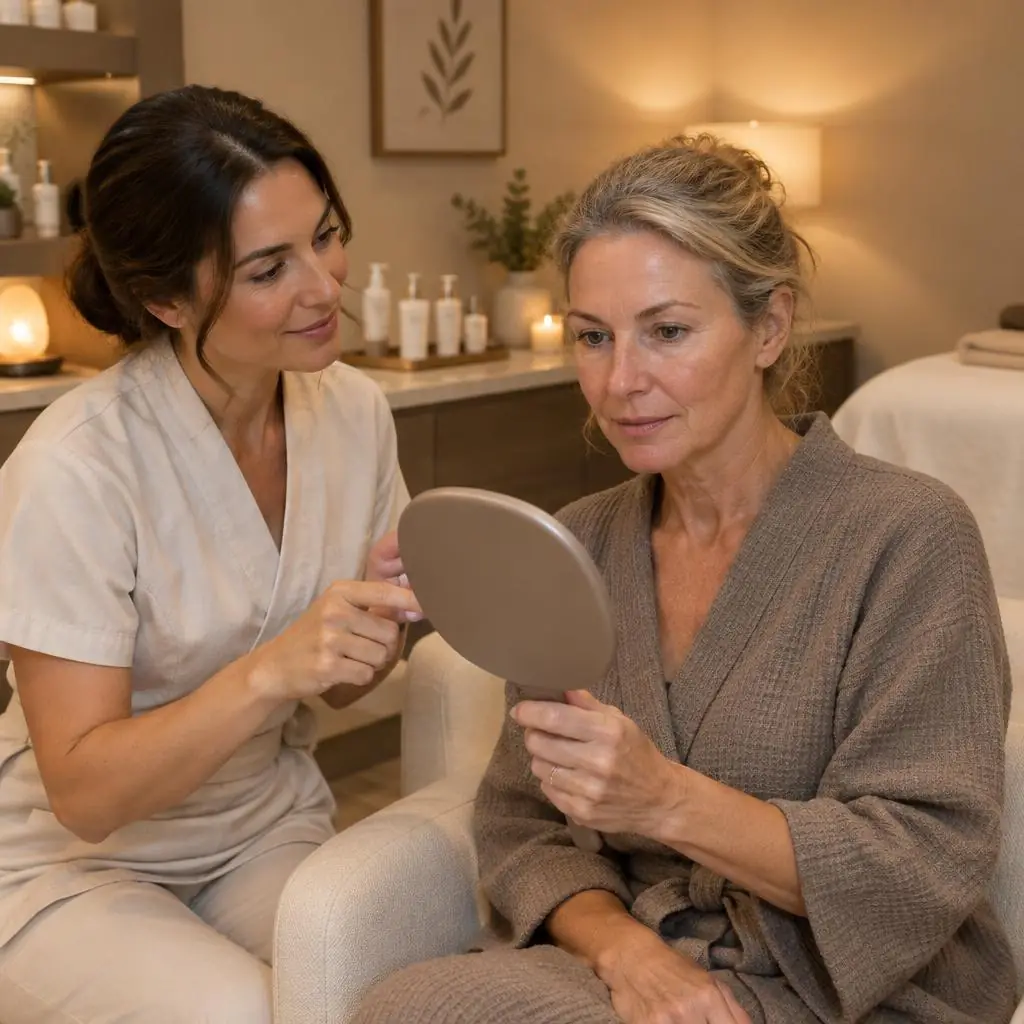
Accounting for Sun Exposure Along the Missouri River Bluffs
Sugar Creek sits along the Missouri River between Kansas City and Independence, where rolling topography and scenic bluffs invite residents outdoors throughout the year. Whether you are spending afternoons working in the yard or walking scenic routes near the river bluffs, ambient UV exposure plays a significant role in how pigment behaves. Ultraviolet rays quickly stimulate melanocytes, often causing settled blemish marks or existing patches to darken unexpectedly.
When designing a hyperpigmentation facial for our Sugar Creek clients, we always take these local outdoor routines into account. Managing stubborn tone requires an honest look at your daylight habits, as even incidental exposure through car windows or cloudy riverfront days can slow your progress. Our goal is to pair professional in-spa care with practical sun management strategies that support steady, lasting clarity without disrupting your active lifestyle.
How Western Missouri Weather Influences Melanin Response
The climate across Jackson and Clay County shifts dramatically from sweltering, humid summers to dry, windy midwestern winters. In the heat of summer, sweat and intense sunshine can easily aggravate skin that is prone to post-inflammatory marks. Conversely, winter furnace heat and cold winds strip natural moisture, leaving the outer skin barrier compromised and highly vulnerable to reactive pigment production when irritation strikes.
Our hyperpigmentation facial adapts to these regional seasonal changes by focusing on calmness and controlled exfoliation. Rather than pushing aggressive treatments during harsh weather cycles, we select ingredients and modalities that support healthy cellular turnover while keeping inflammation exceptionally low. This gentle, methodical rhythm helps your complexion handle regional climate shifts comfortably, reducing the risk of triggering rebound discoloration.
Planning Your Treatment Trip from Sugar Creek
Visiting our Lee’s Summit treatment room from Sugar Creek is straightforward and stress-free. Most clients travel down from US-24 to connect with I-435 South, enjoying a convenient highway route that leads directly toward our location inside KC Injectables Med Spa. Because you are traveling back after a professional skincare session, scheduling your visit around your weekly errands makes for an easy self-care routine.
We recommend planning your drive home with basic sun care in mind, especially if you book a midday appointment when the sun sits high over the metro area. Keeping a physical sunscreen, wide-brimmed hat, or sunglasses in your car ensures your newly treated skin remains shielded on the highway drive back toward northern Jackson County.
Deciding Between a Tone-Focused Facial and Peel Options
Clients often arrive wondering whether they should book a gentle tone-balancing facial or pursue deeper corrective peels. Chemical peels have their place, but diving straight into aggressive acids can occasionally trigger post-inflammatory hyperpigmentation in skin that is already reactive or stressed. A tone-focused facial provides an ideal middle ground, allowing us to evaluate your pigment depth and skin sensitivity before introducing heavier exfoliation.
During your appointment, we review your history with past breakouts, lingering marks, and daily skincare products. If your skin shows signs of barrier weakness or lingering inflammation, starting with a restorative hyperpigmentation facial may help steady your tone safely. Once your skin demonstrates that it tolerates targeted brightening steps without redness, we can mutually decide if introducing peel alternatives makes sense for your goals.
Protecting Your Skin Around Downtown Sugar Creek
After your session, the care you practice at home remains the most critical factor in achieving a balanced complexion. If you plan to spend time in Downtown Sugar Creek attending community gatherings or walking through local neighborhood parks, your freshly treated skin requires disciplined barrier defense. Avoiding unnecessary friction, pausing active at-home retinoids for several days, and applying broad-spectrum sun protection help prevent delicate melanocytes from overreacting.
We emphasize patience because pigment that formed over months cannot disappear overnight without risking substantial irritation. By pairing gentle professional exfoliation at our Lee’s Summit spa with consistent daily protection back home, you establish an environment where darker marks can fade gradually. We work alongside you to create sustainable habits that keep your skin resilient through every season.
Who it may suit
- People seeking guidance on lingering discoloration after settled blemishes.
- Clients with uneven-looking tone who understand that improvement may be gradual.
- Those willing to maintain sun protection and avoid picking or unnecessary irritation.
- People comparing a tone-focused facial with peel options before deciding.
- Clients who want their pigment history considered before exfoliation is proposed.
Concerns it may help address
- Brown or darker-looking marks remaining after breakouts.
- Patchy-looking tone that has already been appropriately assessed.
- Discoloration made more noticeable by ongoing sun exposure.
- A history of marks after irritation, picking, or unsuitable products.
- Uncertainty about the differences between pigment, redness, and textural scars.
Start by understanding what the mark represents
Not every mark after a blemish is excess pigment. Some are persistent redness, while others involve a change in texture or a true scar. These differences influence what a facial can reasonably address. Your esthetician can discuss cosmetic appearance, but a diagnosis of melasma or another pigment disorder belongs with an appropriately qualified clinician.
New, changing, irregular, bleeding, or otherwise concerning spots should be medically evaluated before cosmetic treatment. Do not assume a dark area is harmless simply because it resembles a sunspot or appeared near an old blemish. A safe consultation should recognize uncertainty and support referral rather than promise to remove every visible patch.
Avoid turning treatment into another source of inflammation
Post-inflammatory hyperpigmentation can follow acne, irritation, injury, or overly aggressive treatment. This makes your previous reactions particularly relevant. Tell your esthetician whether you develop long-lasting marks after waxing, picking, peels, or product reactions. That history may justify a more conservative approach even when your skin feels comfortable on the appointment day.
Your esthetician will confirm whether exfoliation is proposed and which products are suitable. A tingling or peeling sensation is not proof that pigment is being treated effectively. Combining several brightening products or procedures can increase irritation and make progress harder to assess, so a simpler, well-tolerated plan may be preferable.
Build a plan that accounts for recurrence
Uneven tone often changes gradually and may return when the triggers continue. Sun protection is central to a realistic plan, alongside avoiding picking and managing active inflammation appropriately. Broad-spectrum sunscreen, shade, and protective clothing matter even when the facial produces a brighter-looking surface. Certain pigment conditions may require additional clinician-directed protection strategies.
Review improvement using photographs taken under similar lighting rather than relying on daily mirror changes. A facial may support the appearance of more even tone, but it cannot guarantee removal or prevent recurrence. If progress stalls or the pattern changes, reassessment and medical guidance are more useful than repeatedly escalating exfoliation.
Before, during and after
before
Describe when discoloration started, whether it changes, previous diagnoses, sun exposure, and any history of pigment after irritation.
during
Your esthetician will confirm a suitable approach and explain why some exfoliating steps may be limited or avoided.
after
Follow a gentle routine, maintain sun protection, and monitor for irritation or darkening rather than assuming every change is expected.
Is it right for you?
A consultation or referral may be appropriate when:
- Suspicious, new, or changing pigmented lesions require medical assessment before cosmetic treatment.
- Active inflammation or infection may need to be addressed before tone-focused care.
- A history of post-inflammatory pigmentation should influence treatment intensity and product choices.
- Pregnancy, nursing, and prescription pigment treatments must be disclosed for appropriate screening.
- Recent tanning, sunburn, peels, or laser procedures may affect treatment timing.
Preparation
- Bring details of any diagnosis or treatment previously given for the discoloration.
- List brightening products, acids, retinoids, and prescribed topical medications.
- Avoid picking blemishes or deliberately intensifying exfoliation before the appointment.
- Explain recent sun exposure and any upcoming outdoor plans that affect aftercare.
- Consult your treating clinician before altering prescription pigment treatment or other medication.
Aftercare
- Use broad-spectrum sunscreen consistently and combine it with shade and protective clothing.
- Avoid picking, rubbing, or scrubbing areas that feel irritated.
- Follow the recommended timing for restarting exfoliants and brightening products.
- Introduce new products cautiously rather than layering several unfamiliar actives.
- Report persistent irritation, unexpected darkening, or changing lesions and seek medical advice when appropriate.
Preparation and aftercare above are general guidance; your provider gives final instructions for your appointment.
Realistic expectations
- Improvement may be gradual, partial, or limited depending on the cause and depth of discoloration.
- A facial does not guarantee removal of melasma, sunspots, or post-inflammatory marks.
- Pigmentation can recur when contributing factors continue.
- Irritation can worsen uneven tone, making treatment tolerance an important outcome.
How it compares
Compare the likely cause of the appearance change before choosing a treatment category.
| Option | Best for | Experience | Downtime |
|---|---|---|---|
| Acne-fighting facial | Current congestion and breakout-prone skin rather than settled pigment marks. | Attention to suitable congestion care and inflammation limits. | Selected steps may cause temporary redness or localized tenderness. |
| Chemical peels | Selected tone concerns after formulation-specific assessment. | A distinct chemical exfoliation treatment with its own precautions. | Varies by peel, skin response, and the treatment plan. |
| Microneedling | Selected textural concerns rather than assuming all dark marks are scars. | Controlled needle punctures requiring separate risk assessment. | A healing period and pigment-aware aftercare are necessary. |
Planning your visit from Sugar Creek, MO
Sugar Creek sits along the Missouri River between Kansas City and Independence.
We don’t have an office in Sugar Creek. We welcome clients from Sugar Creek at our Lee’s Summit spa — 286 SW Blue Parkway, Suite 2, Lee’s Summit, MO 64063, inside KC Injectables Med Spa. Major roads in and around Sugar Creek include I-435, US-24; the Google Maps directions link below gives you live routing and timing.
Account for local sun exposure and outdoor routines when planning tone-focused care and ongoing protection.